Introduction
Concrete patios, sidewalks, walkways, and steps have long been a popular choice for homeowners due to their durability and low maintenance requirements. However, with spring in the air and the warmer weather encouraging outdoor activities, it’s the perfect time to give your concrete surfaces some much-needed TLC. Winter and the changing seasons can take a toll on your concrete, leaving behind dirt, debris, moss, mildew, and stains. By following these simple steps, you can keep your concrete surfaces looking clean and bright all season long.
Preparation
Before diving into the cleaning process, it’s essential to prepare the area properly. Start by removing any outdoor furniture, potted plants, and other items from the concrete surface. This will make it easier to access the entire area and ensure a more thorough cleaning.
Next, tackle any debris and moss on the concrete. It’s important to clean this off before using any water to avoid spreading the dirt and potentially causing more stains. To do this, use a stiff-bristled broom to loosen up the moss and sweep it off the surface. For larger areas or those with a significant amount of debris, consider using a leaf blower to clear it quickly and efficiently. Be sure to dispose of the debris properly, as it may contain seeds or spores that could regrow if left unattended.
Power Washing
Once the surface is clear of debris, it’s time to give it a thorough cleaning. One of the most effective ways to do this is by using a power washer. This high-pressure cleaning tool is perfect for removing built-up dirt, mildew, and stains from your concrete surfaces without the need for harsh abrasive cleansers.
To begin, wet the concrete surface with a garden hose or the power washer on a lower setting. This will help to loosen any remaining dirt and make it easier for the power washer to lift away stains.
Next, set your power washer to a medium pressure setting, ensuring it’s not too high to avoid damaging the concrete surface. Starting at one end of the area, work your way across the surface in a slow, steady motion, maintaining a consistent distance between the power washer nozzle and the concrete. It’s best to work in sections to avoid missing any spots, overlapping each pass slightly for a thorough clean.
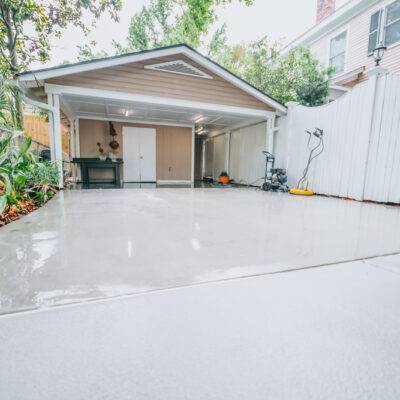
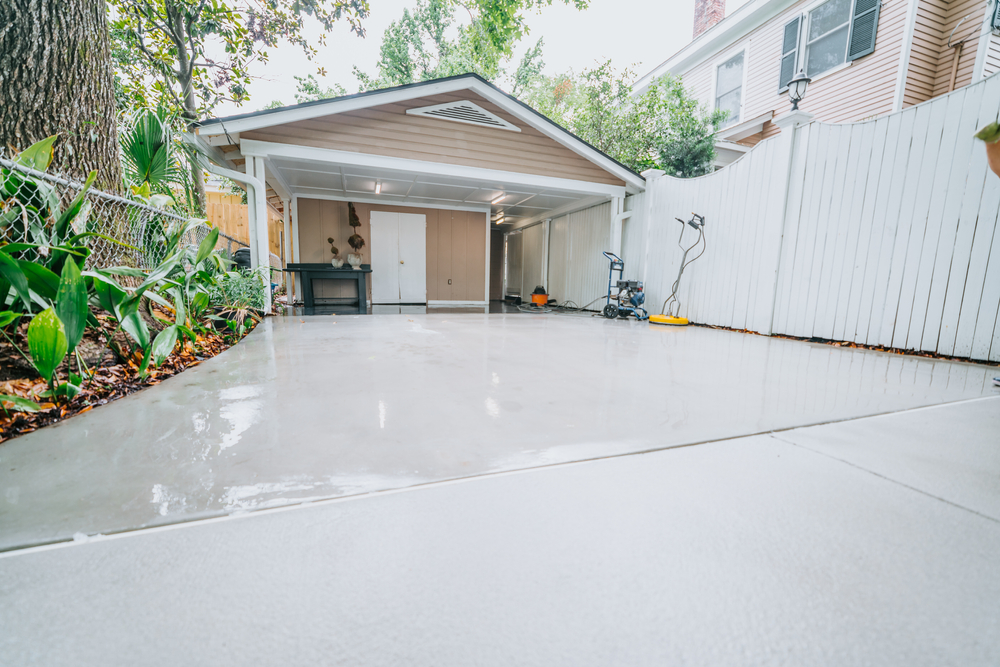
As you work, you’ll notice the color of the concrete changing as years of dirt and grime are washed away. Be sure to rinse the surface thoroughly with clean water once you’ve finished power washing, as any remaining residue can cause slippery conditions or damage the concrete over time.
Cleaning Stubborn Stains
While a good power wash is often all you need to refresh your concrete surfaces, some stains may require extra attention. If you encounter stubborn stains, such as oil or grease spots, try using a specialized concrete cleaner. These products are designed to break down tough stains without causing damage to the concrete.
To use a concrete cleaner, follow the manufacturer’s instructions, which typically involves applying the cleaner to the stained area, allowing it to sit for a specified period, and then scrubbing with a stiff-bristled brush. Once you’ve treated the stain, rinse the area thoroughly with clean water to remove any residue.
Sealing Your Concrete
After cleaning your concrete surfaces, it’s a good idea to apply a concrete sealer. This protective coating can help to extend the life of your concrete and prevent future staining by creating a barrier against moisture, dirt, and other contaminants.
There are several types of concrete sealers available, so be sure to choose one that’s appropriate for your specific surface and needs. When applying the sealer, follow the manufacturer’s instructions carefully, which typically involve cleaning the surface, allowing it to dry completely, and then applying the sealer with a roller or sprayer. Be sure to work in a well-ventilated area and wear appropriate protective gear, as some sealers can emit strong fumes.
Allow the sealer to dry for the recommended time, usually 24 to 48 hours, before placing any furniture or heavy objects back onto the surface. Keep in mind that the concrete may look slightly darker after sealing, but this is normal and should fade over time.
Maintaining Your Concrete
Regular maintenance is key to keeping your concrete surfaces looking their best. To prevent the buildup of dirt, debris, and stains, consider establishing a routine cleaning schedule. Sweeping or blowing off debris on a weekly basis can help to prevent moss and mildew growth, while a thorough power washing once or twice a year can keep your concrete looking fresh and clean.
Additionally, be sure to address spills and stains promptly, as the longer they sit on the concrete, the more difficult they can be to remove. Finally, reapply a concrete sealer every few years, or as recommended by the manufacturer, to maintain the protective barrier and keep your concrete in top condition.
Conclusion
Spring is the perfect time to revitalize your concrete surfaces and prepare them for the warmer months ahead. By following these simple steps, you can ensure that your patios, sidewalks, walkways, and steps remain clean, bright, and inviting all season long. Remember that regular maintenance and proper care can greatly extend the life of your concrete, helping to maintain its appearance and structural integrity for years to come. So, grab your broom, power washer, and sealer, and get started on your spring concrete cleaning today!